How to Create an Educational Course for Learning the MPC: From Knowledge to Scalable SystemHow much fabric do you actually need
Turning Skill Into Structured Education
Owning an MPC and knowing how to use it are two different things.
Teaching it effectively is a third level entirely.
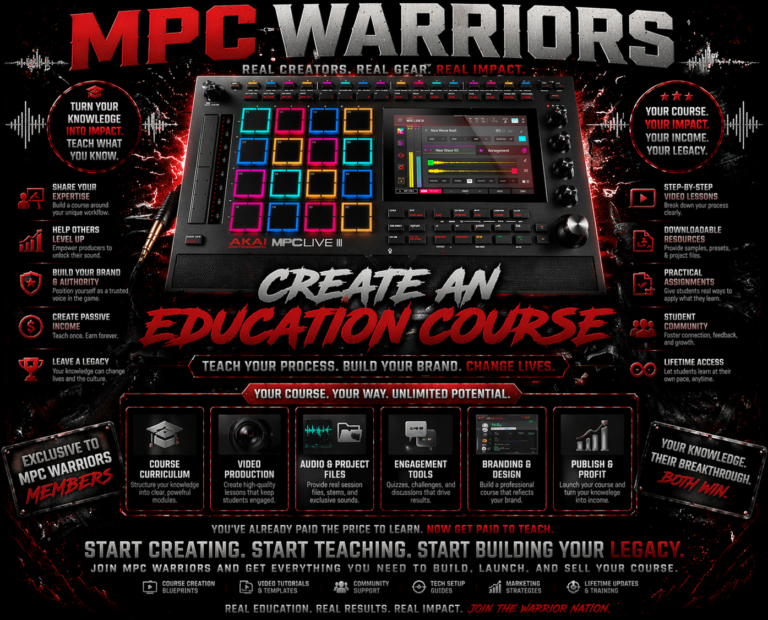
Many producers understand the MPC from experience—but struggle to translate that knowledge into a clear, structured learning system. The result is scattered tutorials, incomplete explanations, and students who feel lost.
Creating a course is not about showing everything you know.
It is about organizing what matters into a repeatable path of progression.
If done correctly, your MPC course becomes more than content.
It becomes:
A system
A product
A scalable asset
A long-term authority builder

1. Define the Outcome Before the Content
The first step in building a course is not recording videos.
It is defining the result.
Ask:
- What should the student be able to do at the end?
- What problem am I solving?
- What transformation am I delivering?
For an MPC course, outcomes might include:
- Building a full beat from scratch
- Understanding MPC workflow
- Creating content using the MPC
- Exporting and sharing finished tracks
Clarity of outcome determines clarity of structure.
Without a defined result, your course becomes information—not transformation.
2. Identify Your Target Student
Not all learners are the same.
Your course must be designed for a specific level:
- Beginner (no experience)
- Intermediate (basic knowledge, needs structure)
- Advanced (refinement and optimization)
Trying to teach everyone leads to confusion.
For example, a beginner MPC student needs:
- Navigation basics
- Terminology explained
- Step-by-step walkthroughs
An intermediate user needs:
- Workflow efficiency
- Advanced sampling techniques
- Mixing and arrangement strategies
The more specific your audience, the more effective your course.
3. Break the MPC Workflow Into Stages
The MPC can feel overwhelming because it does many things.
Your job is to simplify it into stages.
A structured MPC course might include:
Stage 1: Foundations
- Understanding the MPC interface
- Navigating menus and modes
- Basic terminology
Stage 2: Rhythm Creation
- Drum programming
- Pad performance
- Timing and groove
Stage 3: Sampling
- Chopping samples
- Assigning pads
- Manipulating audio
Stage 4: Building the Beat
- Adding bass and melodies
- Layering sounds
- Creating loops
Stage 5: Arrangement
- Structuring a full track
- Transitions and energy flow
Stage 6: Mixing Basics
- Levels
- EQ fundamentals
- Basic effects
Stage 7: Export and Distribution
- Bouncing tracks
- Preparing content
- Sharing work
Breaking the process into stages removes overwhelm and builds confidence.
4. Teach Step-by-Step, Not Concept-Only
Many courses fail because they focus on explanation without execution.
Students do not just need to understand—they need to do.
Each lesson should include:
- A clear objective
- A step-by-step walkthrough
- A visible result
For example:
Instead of saying “Use the sampler,” show:
- How to load a sample
- How to chop it
- How to assign it to pads
- How to build a pattern
Clarity comes from demonstration.
The more actionable your lessons, the more valuable your course.
5. Build a Repeatable Workflow System
Your course should not feel like random lessons.
It should feel like a system students can repeat.
For example, a simple MPC workflow could be:
- Load or create drum pattern
- Add sample or melody
- Build bassline
- Structure loop
- Arrange track
- Apply basic mix
- Export
When students understand a repeatable process, they gain:
- Confidence
- Speed
- Independence
A course is successful when students no longer need it.
6. Incorporate Real-Time Demonstrations
Theory alone is not enough.
Students need to see:
- How you think
- How you troubleshoot
- How you make decisions
Include:
- Full beat creation sessions
- Mistake corrections
- Real-time adjustments
This gives students insight into the process, not just the result.
It also builds trust.
7. Design for Content and Community Integration
A modern course should not exist in isolation.
It should connect to:
- Social media content
- A private community
- Ongoing updates
For example:
- Short clips from your course become social media content
- Students join a group for feedback
- New lessons are added over time
This turns your course into an ecosystem.
And ecosystems create:
- Retention
- Engagement
- Long-term value
8. Focus on Transformation, Not Just Information
The biggest mistake course creators make is delivering too much information without clear progress.
Your goal is not to overwhelm—it is to guide.
At each stage, the student should feel:
- Progress
- Clarity
- Increased confidence
This means:
- Avoid unnecessary complexity
- Focus on essential skills
- Build step-by-step momentum
Transformation creates results.
Results create reputation.
9. Package the Course Strategically
How you present your course matters.
Instead of offering a single product, consider structuring it into tiers:
- Basic Access: Core MPC lessons
- Advanced Access: Workflow, mixing, and content creation
- Elite Program: Coaching, feedback, and community
This allows you to:
- Serve different levels
- Increase revenue potential
- Build a premium experience
Your course is not just education—it is a product.
10. Continuously Improve the Course
Your first version will not be perfect.
And it does not need to be.
Launch with:
- Clear structure
- Core lessons
- Real value
Then improve based on:
- Student feedback
- Common questions
- Observed struggles
The best courses evolve.
And as your course improves, your authority grows.
Build Once, Teach at Scale
Creating an MPC course allows you to:
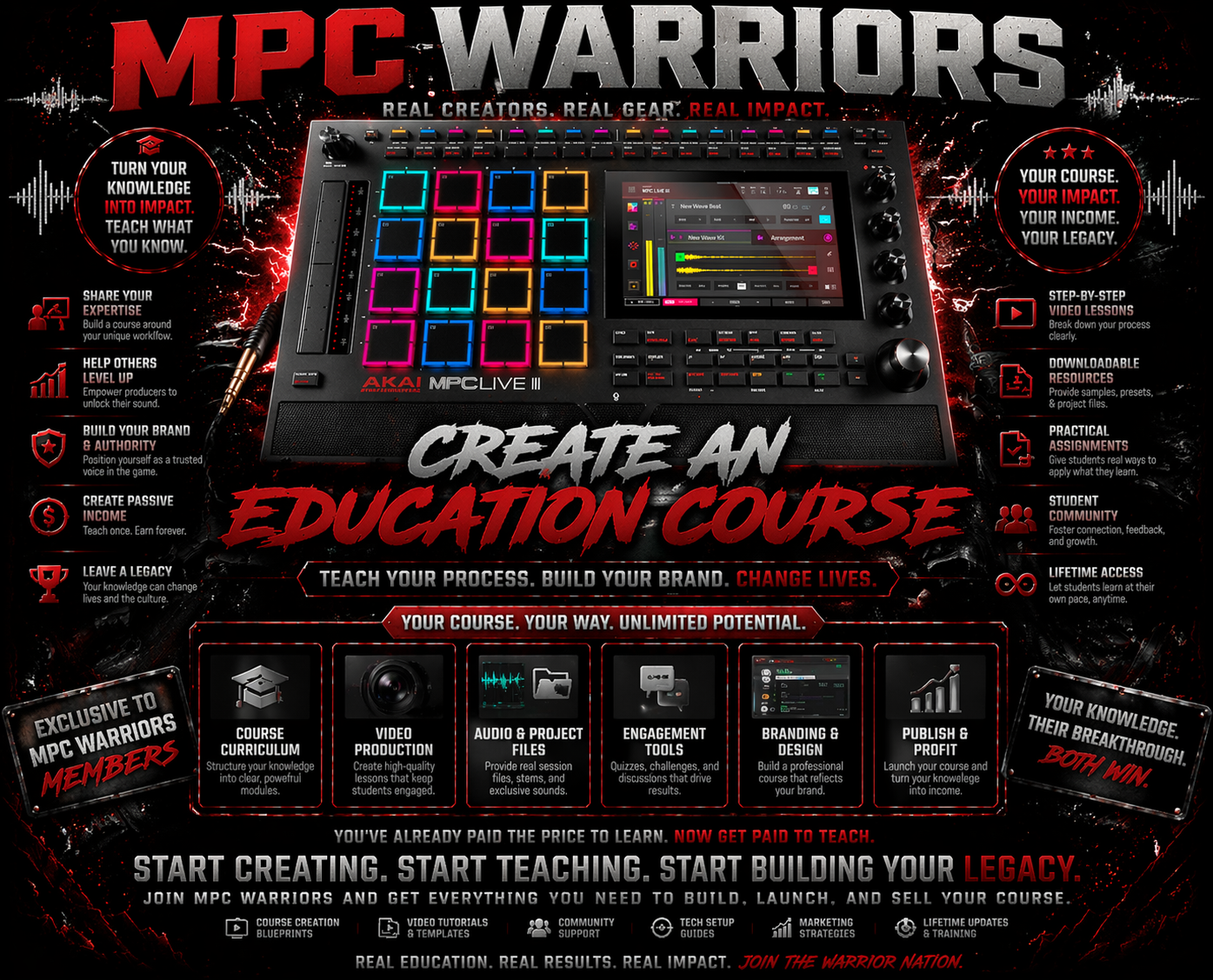
- Share your knowledge
- Help others grow
- Build a scalable income stream
- Establish authority in your space
When structured correctly, your course becomes:
- A system students can follow
- A product that generates value repeatedly
- A foundation for a larger ecosystem
Final Thought
Teaching the MPC is not about showing everything you know.
It is about:
- Simplifying complexity
- Structuring knowledge
- Guiding progression
The clearer your system, the stronger your impact.
Warrior Wake UP
If you’re ready to not only master the MPC—but also learn how to turn your knowledge into a structured system, content engine, and income stream:
Join the MPC Warriors Elite Program.
- Learn the full workflow
- Build your course-ready system
- Create content with purpose
- Monetize your knowledge
This isn’t just about learning the MPC.
This is about building a platform around it.
Forge your system. Control your future.